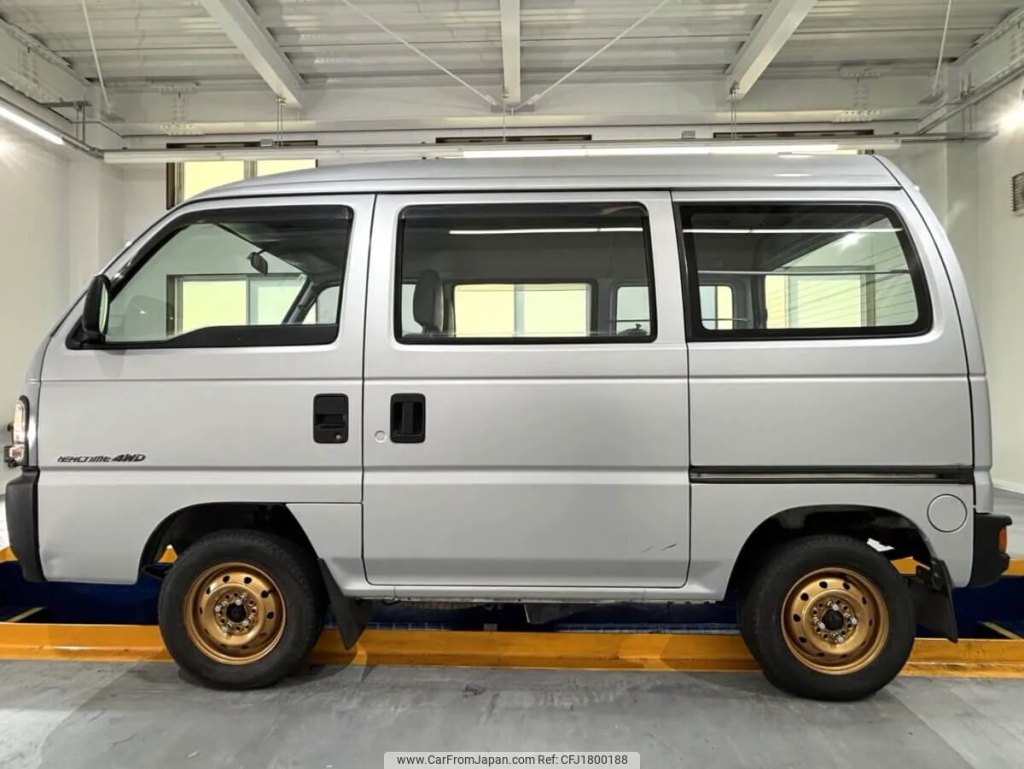
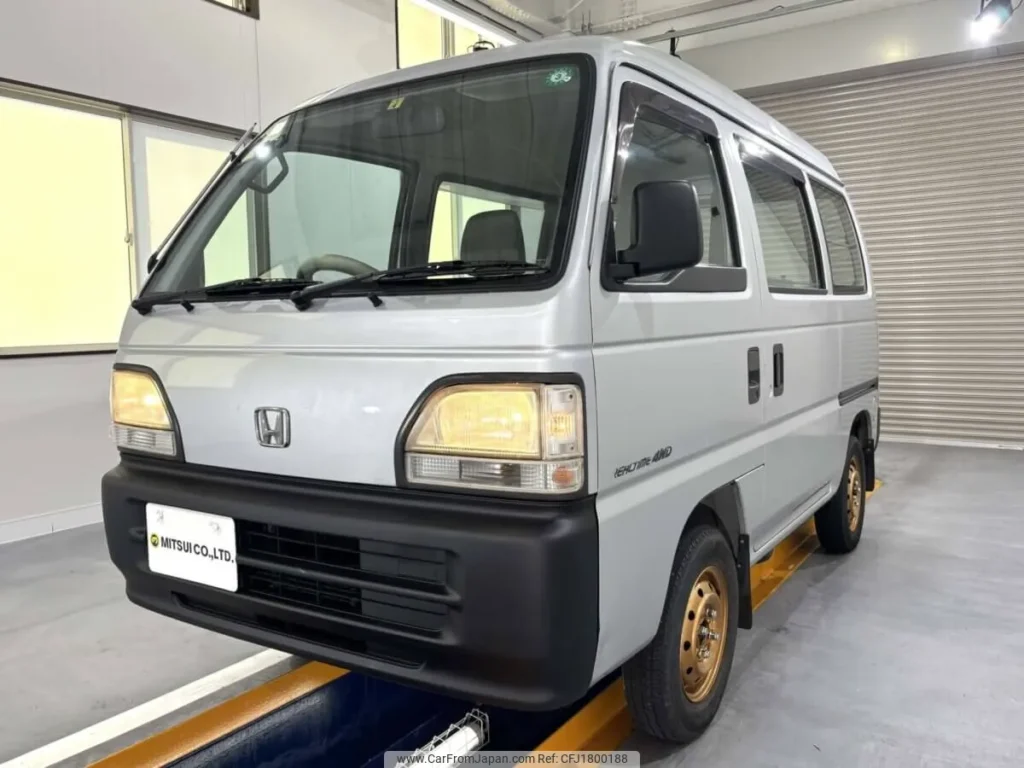
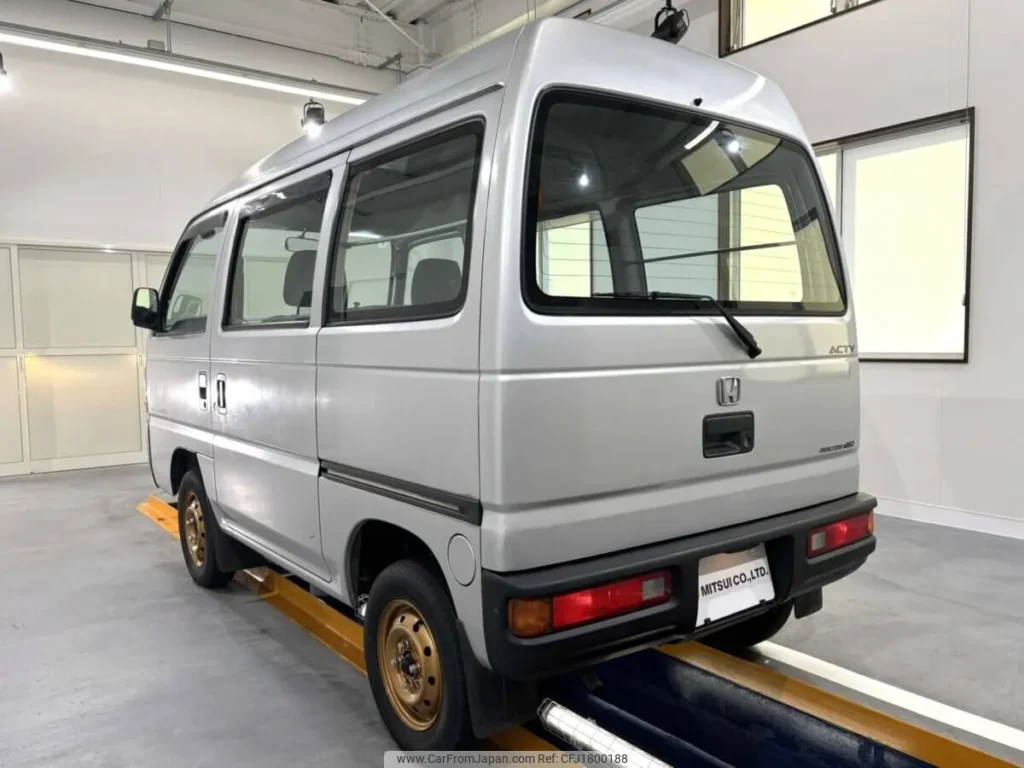
A 1996 Honda Acty Van, imported from Japan, and the ongoing project of turning it into a small, weird, extremely charming dog-hauler. Frequently asked questions, mostly asked by me, to myself, while working on it.
| Chassis | HH4-2303189 |
| Trim | SDX, high-roof |
| Color | Silver |
| Engine | E07A, 656cc SOHC 3-cylinder, throttle-body injected |
| Transmission | 5-speed manual |
| Drivetrain | Realtime 4WD |
| Odometer at import | 14,249 km (~8,850 mi) |
| Home base | Gloucester, Massachusetts |
Jump to a question:
- What’s a kei car, and why does this thing exist?
- Isn’t this just a “JDM car”? What’s the difference?
- Is it hard to drive on the right-hand side?
- What’s “shaken,” and why does it matter for a car like this?
- How did I find this particular van?
- How did I get it from Japan to Massachusetts?
- What condition did it show up in?
- What have I actually done to it so far?
- What’s next?
- Details and dimensions
- References
What’s a kei car, and why does this thing exist?
My van belongs to a Japanese vehicle category called kei jidōsha — “light vehicle,” usually shortened to kei. The Japanese government created the category in July 1949, when most citizens couldn’t afford a full-sized car but plenty could scrape together enough for a motorcycle. The original rules were absurdly tight: a four-stroke engine capped at 150cc, a two-stroke at 100cc, dimensions to match. The goal was to get ordinary people into some kind of enclosed, four-wheeled transportation while giving Japan’s rebuilding auto industry a market to build for.
The displacement cap crept upward as the category proved itself: 360cc in 1955 (the year the segment really took off, with cars like the Subaru 360), 550cc starting in 1976, and 660cc — where it still sits today — starting in October 1990. Dimensions are currently capped at 3.4m long and 1.48m wide. In exchange for staying inside those limits, kei owners get meaningfully lower annual taxes, cheaper mandatory insurance, and in most of the country an exemption from having to prove they own a parking space before they’re allowed to register a car at all.
Kei trucks — the pickup-bed cousins of my van — showed up in 1959, and Honda’s Acty line, offered as both truck and van, has been part of that lineup since 1977. Mine’s a third-generation Acty on the HH chassis, built right at the tail end of the 660cc-era styling before Honda redesigned the line in 1999.
Back to TopIsn’t this just a “JDM car”? What’s the difference?
People use “JDM” pretty loosely — sometimes for anything Japanese, sometimes as a vague aesthetic (“JDM-style” wheels, stickers, whatever). Technically, JDM stands for Japanese Domestic Market, and it means a vehicle (or part) that was built and sold specifically for use inside Japan, as opposed to a version built for export. It’s a spec distinction, not a size or category distinction.
Kei is a subset of JDM, not a synonym for it. A Nissan Skyline GT-R or a Honda Civic Type R sold new only in Japan is JDM but absolutely not kei — full-size, high-powered, nothing about it fits the kei displacement or dimension limits. My van, on the other hand, is both: it was built to Japan’s kei-jidōsha regulations and it was only ever sold in the Japanese domestic market. Every kei car is JDM by definition (nobody else regulates cars this way, so nobody else’s market gets kei-spec vehicles as factory products), but plenty of JDM cars — arguably the ones people get most excited about — are the opposite of kei: big engines, wide bodies, and none of the tax breaks.
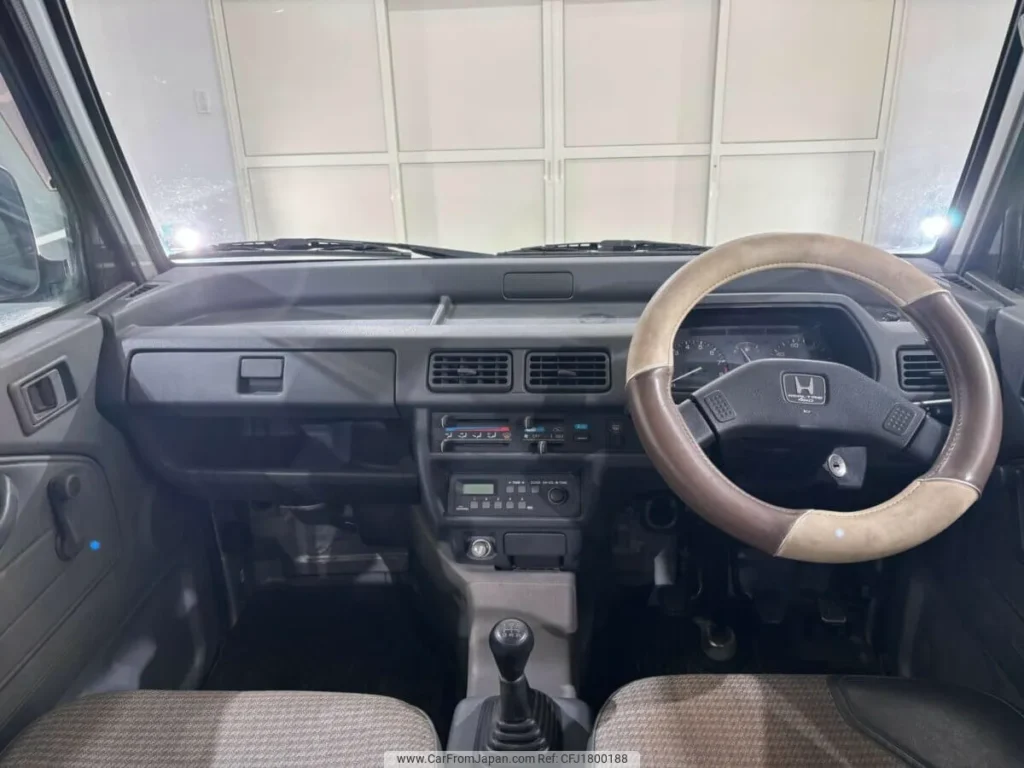
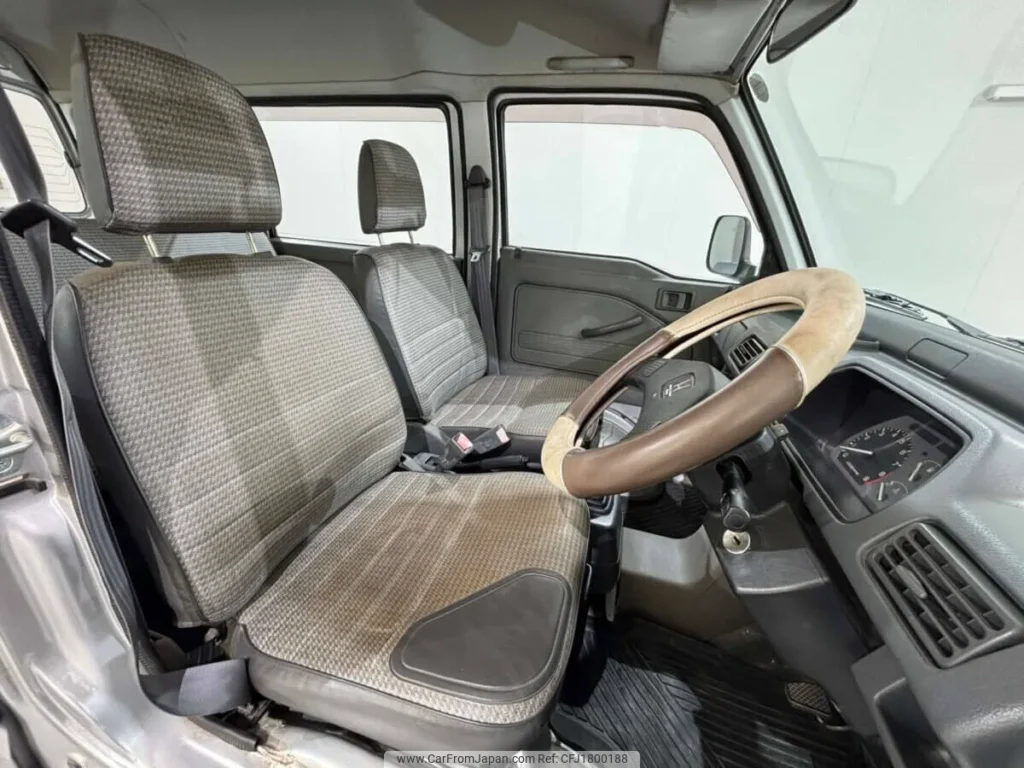
The other practical wrinkle is right-hand drive. Most JDM vehicles, kei or not, were built RHD for Japan’s roads, which is exactly the “how do I order at a drive-thru” complaint you’ll hear from anyone who’s imported one. Mine included — the steering wheel is on the side you don’t expect.
Back to TopIs it hard to drive on the right-hand side?
Its not hard to drive a vehicle with the steering wheel on the right-hand side. At first I drove a little bit to far to the left side of the lane, but you get over that pretty quickly. Some aspects of driving a right-hand drive vehicle are easier. Like parallel parking. Parallel parking is about a million times easier with the wheel on the right side of the car.
Some people asked me if shifting was confusing. Since the steering wheel is on the right, you shift with your left hand. Its the same shift pattern as a car with the wheel on the left, but since you use your left hand, the pattern is ‘mirrored’. I thought that might be confusing too, but it was not.
There is one thing I did, and still do, get backwards. I somtimes confuse the windshield washer stalk with the turn signal stalk. Japanese cars have the windshield stalk on the left side of the steering wheel, and the turn signal stalk on the right. American cars are the other way around, so I still sometimes wash the windshield when I want to make a turn. 😀 Funny thing is that I’ve talked to other JDM drivers and they say the same thing. The stalks are the only things they mix up!
Back to TopWhat’s “shaken,” and why does it matter for a car like this?
Every road-legal vehicle in Japan over 250cc has to pass shaken (車検, short for jidōsha kensa tōrokuseido — “automobile inspection and registration system”). New cars get three years before the first one; after that it’s every two years, no exceptions. Driving on a lapsed shaken is illegal, and it usually means the mandatory liability insurance has lapsed too, since the two are bundled together.
It’s not a quick lights-and-horn check. A full shaken lane covers identity verification (engine number matched against the registration, to catch illegal swaps), exhaust emissions, sideslip, a speedometer check at 40 km/h, headlight aim, brake performance on rollers, and an undercarriage pit inspection. Done through a dealer with bundled maintenance, it commonly runs ¥100,000–200,000 (roughly $650–$1,300 at current rates); a DIY “user shaken” through the inspection authority directly can be much cheaper, but most owners don’t bother.
My van’s shaken and export paperwork came through cleanly as part of the purchase — one of the reasons I bought through an established exporter instead of chasing a private listing.
Back to TopHow did I find this particular van?
I went looking specifically for an Acty Van rather than a kei truck — I wanted the enclosed cargo area and the higher roof for a dog-hauling, gear-hauling rig, not an open bed. I found this one through Car From Japan, an established exporter, listed as a 1996 SDX trim in silver with realtime 4WD and a genuinely low import odometer (14,249 km). Clean example, good color, right configuration. I pulled the trigger.
Back to TopHow did I get it from Japan to Massachusetts?
The van crossed the Pacific aboard the Valiant Ace (voyage 0113A), a MOL roll-on/roll-off carrier, departing Yokohama and landing at the Port of Baltimore. From there:
- Customs clearance — I used a customs broker who filed the CBP entry (Formal Consumption Entry, HTS 8703.22.0190) at Baltimore’s Dundalk Marine Terminal. Net entered value came in at $4,865, base duty was free under MFN treatment, and total CBP fees landed at $161.29.
- Domestic transport — an open-carrier hauler picked the van up at the port and drove it door-to-door from Baltimore to Gloucester.
- Registration — Massachusetts issued plates and the van passed state safety inspection shortly after it arrived.
All told, purchase price, shipping, marine insurance, customs brokerage, duties, and domestic transport put me a bit north of $8,300 into a vehicle that would have been effectively unobtainable, and definitely un-titleable, in the US any other way ten years ago.
Back to TopWhat condition did it show up in?
Genuinely good shape. No rust anywhere on my initial walk-around, drives well, shifts cleanly, all fluids topped off by the exporter before it left Japan. Fuel economy on the first tank came in at 34.5 MPG on mixed driving, right in the expected band for this engine.
It wasn’t perfect, though — a couple of things I flagged immediately as needing attention:
- Headlights — severely UV-yellowed lenses, a real hit to actual light output at night.
- Tires — Yokohama Super Van 356s, date-coded to roughly 2020, low-use storage history. Not currently unsafe, but on my replacement list given their age.
What have I actually done to it so far?
- Installed an aftermarket stereo, and in the process fully translated the interior fuse panel from Japanese to English — a useful reference for whatever electrical work comes next.
- Installed and field-tested a Yaesu FT-991A HF/VHF/UHF radio in the van, running an end-fed half-wave antenna as a sloper off a nearby tree. Got a 1.75:1 SWR and worked a station in Halifax, Nova Scotia. I’ve confirmed the van as a viable mobile HF platform, at least for field-deployed antenna setups.
- Refinished the interior plastic panels with a dedicated adhesion primer and vinyl spray paint — held up well.
- Started a fuel log to track real-world efficiency over time.
What’s next?
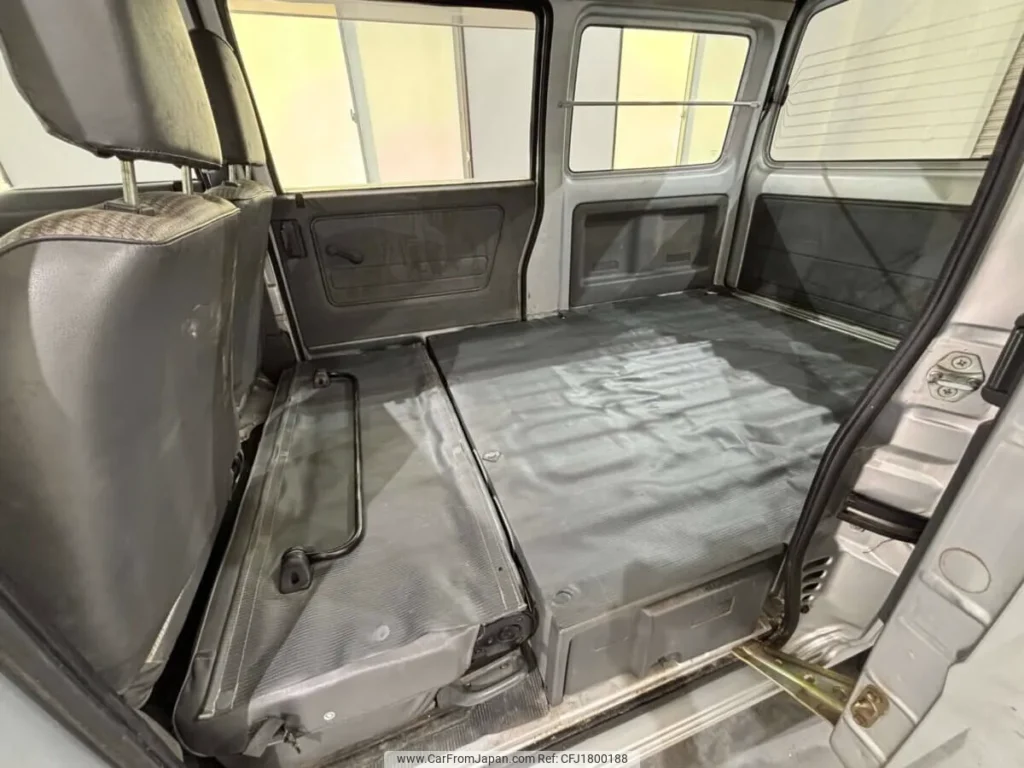
- Interior build-out — floor liner, wall insulation, a proper dog-cargo layout. I’ve reached out to a local college’s interior design graduate program about taking the van on as a student design project, which should get me a more thought-out interior than I’d design myself.
- LED headlight retrofit — I’ve got my eye on a kit built specifically for this chassis generation, which should mean less guesswork on beam pattern and re-aim.
- Tire replacement — same conclusion as day one, I just haven’t pulled the trigger yet.
- A proper mobile HF antenna — the EFHW is great for parking and deploying, but not something I can leave up while driving. I’m looking at a permanently mounted whip or screwdriver antenna.
- LiFePO4 auxiliary battery for the radio, with a DC-DC charger off the alternator, so HF operation doesn’t load a kei van’s already-modest charging system.
- Drum brake inspection — the wheel cylinders are 30 years old; worth a look for seepage even though nothing’s currently wrong.
- Rear hatch awning — for camping and trailhead use. The tricky part is that my rear hatch is an upward-swinging liftgate rather than barn doors, so most off-the-shelf awning frames need rethinking before they’ll clear it.
Details and dimensions
The nerdy reference table. Anything I’ve measured or read directly off the van (chassis plate, tach face, sidewalls, tape measure) is listed plain. Anything pulled from general Acty/kei references — because I haven’t independently verified it against this specific van yet — gets a footnote.
| Chassis number | HH4-2303189 |
| Trim | SDX, high-roof |
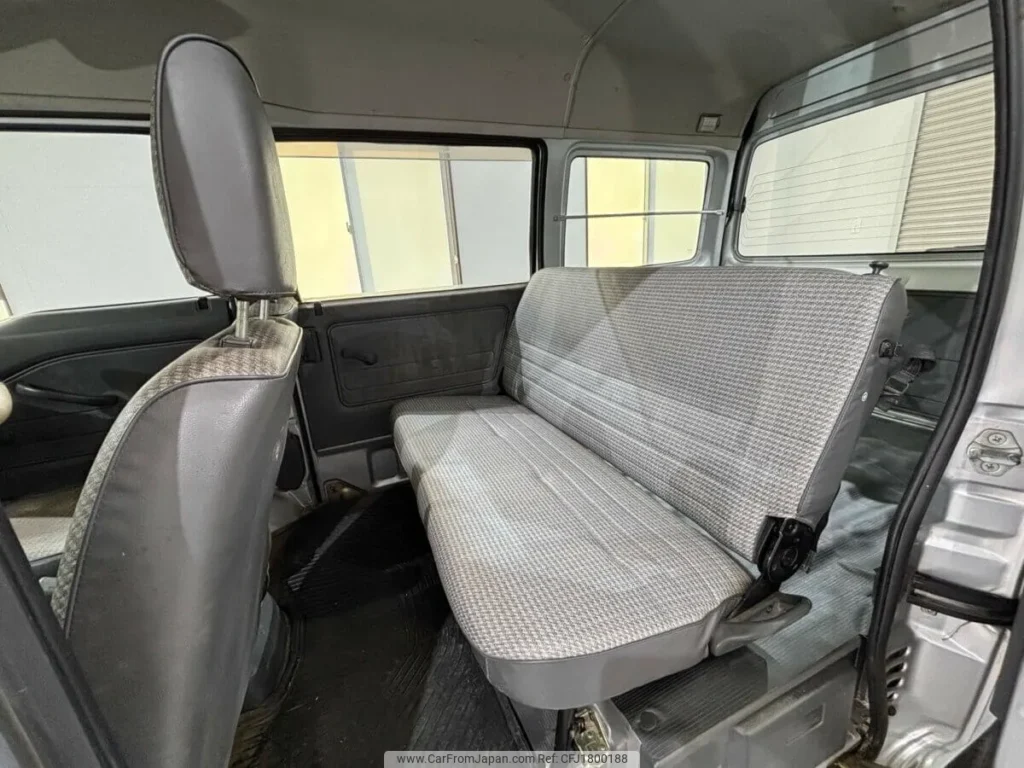
| Body style | Enclosed kei van, mid-engine, rear-wheel-drive layout, single upward-swinging rear hatch |
| Exterior length | ~340 cm (134 in)1 |
| Exterior width | ~148 cm (58.3 in)1 |
| Exterior height | ~188 cm (74 in)1 |
| Wheelbase | ~242 cm (95.3 in)1 |
| Curb weight | ~800–1,030 kg (1,764–2,270 lb)1 |
| Cargo floor length (rear bench folded) | ~4–5 ft, full van width, high-roof standing headroom |
| Floor tie-downs | 4+ D-rings built into the floor |
| Engine access | 3 hatches in the rear floor (mid-mounted engine — oil changes and engine work happen through the floor, not the front) |
| Wheel bolt pattern | 4x110mm (JDM-specific, not common on US wheels) |
| Tires | Yokohama Super Van 356, 145/80R12 80/78N LT |
| Fuel tank capacity | ~37 L (9.8 gal)2 |
| Engine | E07A — 656cc, SOHC, 3-cylinder, 12-valve, throttle-body injected |
| Bore × stroke | 66.0mm × 64.0mm3 |
| Compression ratio | ~9.8:13 |
| Power / torque | ~40–45 hp, ~40–53 Nm (varies by tune/source)3 |
| Transmission | 5-speed manual, H-pattern, reverse bottom-right |
| Drivetrain | Realtime 4WD (viscous-coupling on-demand AWD, not selectable) |
| Tachometer range | 0–9,000 rpm (confirmed from gauge face) |
| Optimal shift point (casual driving) | ~3,000–4,000 rpm4 |
| Speedometer range | 0–120 km/h |
| Engine oil capacity | ~2.5 L with filter, 10W-30 or 5W-30 |
| Timing | Belt-driven (not chain) — interval-sensitive, replace if service history is unknown |
| Spark plugs | NGK BKR5E or equivalent |
Footnotes — figures still to be confirmed against this specific van:
- Exterior dimensions, wheelbase, and curb weight are generic 2nd-generation Acty Van (HH-series) figures pulled from an online dimensions database, not measured on my van directly. Kei-class dimension limits are tightly regulated, so these should be close, but I haven’t put a tape measure to it myself yet.
- Fuel tank capacity is the figure commonly cited for Acty trucks/vans generally; I haven’t confirmed it against a fill-to-full on this specific tank. One other source lists 30L for a related Honda kei model (the Today), so there’s some spread in what’s out there — treat this as approximate until I measure it directly.
- Bore, stroke, compression ratio, and power/torque are E07A figures gathered from Honda-platform references and a closely related application (the Honda Today, which shares this engine family). Output in particular varies a fair amount by tune and source — figures for this exact engine, throttle-body-injected and installed in a van rather than a passenger car, haven’t been independently confirmed on a dyno.
- I couldn’t find a factory-specified shift point for this engine/application. This is a rule-of-thumb estimate for a low-torque 656cc TBI kei engine, not a documented spec — take it as “roughly where it feels right,” not gospel.
References
Sources used while researching this page, grouped by topic. A few of these disagree with each other on specifics (fuel tank size, exact horsepower) — where that happened, I noted it above rather than picking one arbitrarily.
Kei car history & regulations
- Wikipedia — Kei car
- Wikipedia — Kei truck
- Design Week — How Japan’s regulations drove creativity
- Fisher Discount — The History of Japan’s Kei Cars (1949–1972)
- autoevolution — The Best Kei Cars: Past and Present
Shaken inspection system
- Wikipedia — Motor-vehicle inspection (Japan)
- Wikipedia — Japanese used vehicle exporting
- ServiceSage Auto — Shaken: Japan’s Car Inspection, Steps & 2026 Costs
- MDK Corporation — Japanese Vehicle Inspection (Shaken) Guide for Importers
- Japan Living Life — Shaken Vehicle Inspection Guide
JDM vs. kei
- Wikipedia — Japanese domestic market
- JDMBUYSELL — What Is a JDM Car? Definition & Import Rules
- J.D. Power — What Is a JDM Car?
- Drifted — Kei Cars: Everything You Need to Know
Van specifications & E07A engine
- Dimensions.com — Honda Acty Van
- CarGeometry — Honda Acty & Street (HA3/HA4/HH3/HH4) Body Dimensions
- Oiwa Garage — Honda Acty Maintenance Guide
- honda-acty.com — The Ultimate Honda Acty Guide
- Carmanji — Honda Acty: Complete Guide
- JDMBUYSELL — Honda Acty HA4 Buyer’s Guide
- Fisher Discount — Honda’s Three-Cylinder E05/E07 Engine Series
- Infogalactic — Honda E07A Engine
- Car From Japan — Honda Today Special Edition Specs (E07A reference data)
Last updated August 2026 — this page will get stale as the project moves; check back for the current state of things.
Recent Posts:
If you have questions, or own a Kei, put them in the comments below the images.
Leave a Reply